READING ‘’WONDER’’ AND BIASES RELATED TO APPEARANCE
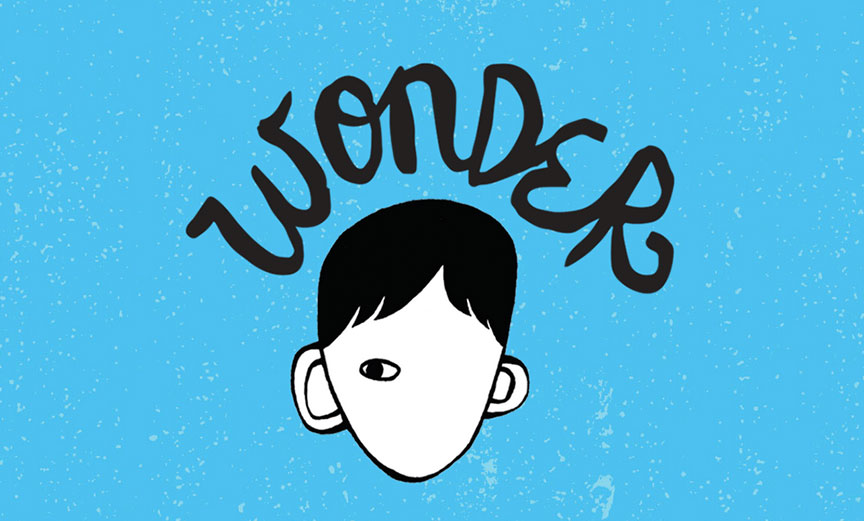
When I was eleven, I was made to read the book ‘’Wonder’’ in class. I liked it so much that I bought all the books in the collection (August, Julian and Charlotte).
These books tell the story of a ten years old boy who has a facial malformation called Treacher-Collins. Due to multiple surgeries, August has always studied from home and now faces the challenge of attending school for the first time.
The process of adapting to the new school is very complicated due to his appearance. His classmates point at him, laugh and do not accept him.
One very interesting thing about these books is that they’re narrated from different points of view so you can see how a situation affects different people and not just the main victim. Perhaps this is one of the reasons why these books left such an impression on me, because they invite us to understand all points of view, to have a broader vision of the situation, to empathize with all the characters and to reflect more deeply.
It’s easy to say from the outside that one would not participate in the process of harassment that August suffers in this case, we tend to say that we would defend him and do the right thing, but I wonder if when it comes to the truth this is so easy.
From psychology we have been taught that we are conditioned with different biases, such as the Halo effect. This says that when we perceive someone as attractive in one aspect, we tend to assume that they will also be attractive in others, despite not having proof of it.
Related to this we find the Horn effect, which would be the opposite of the Halo effect. It explains that when we perceive a negative characteristic we judge a person globally. This is how children who do not conform to the aesthetic norm are often labeled as ‘‘weird’’.
Another bias that determines our impression is the primacy effect. This explains that first impressions have a disproportionate impact. Relating it to bullying, it can be that if a student first presents himself as shy or does not fit in, he can be marginalized for a long time.
Apart from these three biases, there are many more that cause or contribute to this bullying, and although we are sometimes not aware of them, we are all conditioned by them.
I highly recommend this reading for children in the final years of primary school, even older ones, to break with these biases and improve sensitivity.
Júlia Pons Gibert
Hi there, thank you for posting your blog! I haven't heard of this book before, but you have gotten my interest to use it in my internship classroom. I think it's a good aspect that the book shows the perspecitives of different people, as this is often not implied in other books. I think you made a very fair point saying that it's not always true that " If we were in that situation, we would act different and do the right thing". I didn't hear of the halo- and horn effect, so thank you with teaching me some new knowledge. I thought your blog was a very interesting read.
ReplyDelete